Ever wondered what makes your favorite games tick and how those incredible virtual worlds come to life on your screen? This comprehensive guide dives deep into how gaming engines are made demystifying the complex technology behind every epic adventure and competitive match. For the average gamer juggling work family and life understanding game engines means better performance smarter upgrades and richer gaming experiences. We cut through the jargon to explain core components rendering physics and scripting helping you appreciate the innovation that drives modern gaming. Discover why some games feel more immersive or run smoother and how this knowledge empowers you to troubleshoot performance issues or make informed decisions about new titles. This article is your essential resource for staying current with game tech trends enhancing your playtime and connecting with the heart of gaming development without the hype.
Q: What core components define how gaming engines are made for modern titles?
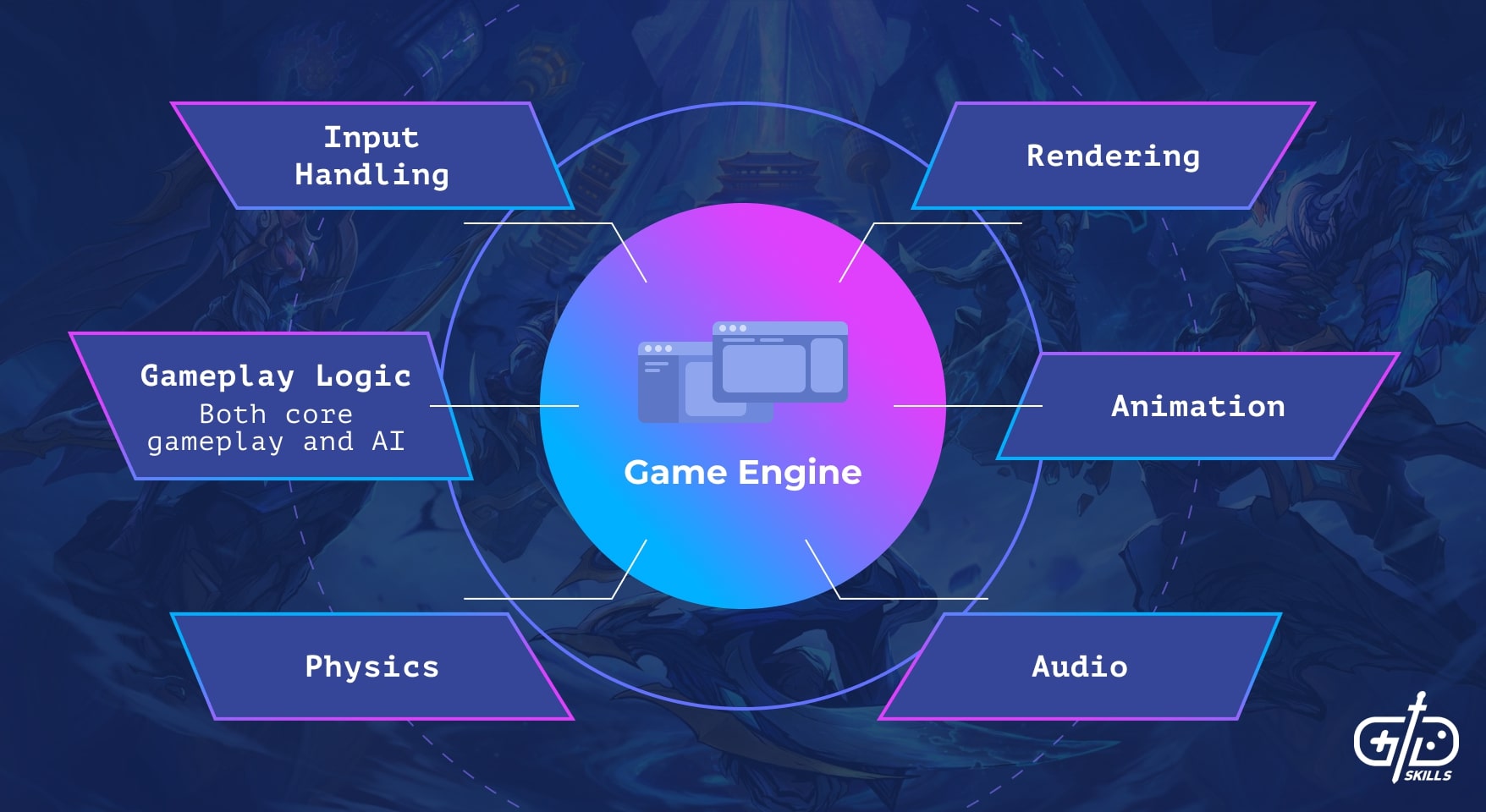
A: Modern gaming engines are complex beasts built from several core components. They typically include a rendering engine for graphics, a physics engine for realistic interactions, an AI system for character behavior, an audio engine for sound effects and music, scripting tools for game logic, an asset management system for all game files, and robust networking capabilities for online play. Each part works together seamlessly to create the immersive experiences we love, whether you are exploring a vast open world or competing in a fast-paced esports match.
Q: How do game engines manage to create such realistic graphics and environments?
A: The rendering pipeline is the magic behind realistic graphics. When considering how gaming engines are made, the rendering component uses advanced techniques like physically-based rendering (PBR) for lifelike materials, global illumination for realistic lighting, and tessellation for highly detailed surfaces. These technologies, combined with sophisticated shaders and post-processing effects, simulate how light interacts with objects and surfaces in the real world. This intricate process transforms 3D models and textures into the breathtaking visuals you see on your 4K monitor or mobile device, truly pulling you into the game world.
Q: Why do some games run smoothly on my aging PC while others struggle on a brand-new rig?
A: Game performance heavily depends on how well the engine and the game itself are optimized. Even with a powerful rig, a poorly optimized game or one pushing the absolute limits of current hardware can struggle. When asking how gaming engines are made, understand that developers spend immense time fine-tuning everything from rendering calls to asset streaming. Factors like draw calls, texture resolution, complex physics calculations, and inefficient code can bottleneck even high-end systems. Sometimes, it's about the engine's inherent design, and other times, it's the specific implementation by the game studio. This is why staying current with driver updates and understanding in-game settings is crucial.
Q: What role do game engines play in connecting players across different platforms and devices?
A: Game engines are fundamental to modern cross-play. As more gamers play on mobile, PC, and consoles, engines provide the underlying architecture to handle varied hardware capabilities and networking protocols. A well-designed engine, part of how gaming engines are made, includes robust networking layers that abstract away platform-specific differences, allowing players on different systems to interact seamlessly. This is vital for the social gaming trends we see today, where friends can easily connect whether they are on a PlayStation, Xbox, Switch, or even a smartphone, fostering stronger online communities and shared experiences.
Q: How do developers utilize game engines to create new content and updates for live-service games?
A: For live-service games, the engine acts as a dynamic content creation and deployment platform. When we consider how gaming engines are made, they include powerful editor tools, asset pipelines, and version control integrations that enable developers to rapidly prototype, build, test, and push new maps, characters, events, and features. This allows studios to keep games fresh and engaging with regular updates, crucial for retaining the 87% of US gamers who regularly play. The engine's modular design means components can be updated or swapped out without rebuilding the entire game, making ongoing development much more efficient and responsive to player feedback.
Q: What future trends are influencing how gaming engines are made and designed right now?
A: Future trends are pushing engine development towards even greater realism, procedural generation, and AI integration. Engines are evolving to better support advanced ray tracing, neural rendering, and AI-driven content creation that can generate vast, unique worlds on the fly. Accessibility features are also becoming standard. The rise of cloud gaming demands engines optimized for streaming and low latency, while VR and AR continue to drive innovation in immersive input and output. These advancements aim to deliver more dynamic, responsive, and personalized gaming experiences, reducing development time while expanding creative possibilities for creators and players alike.
Q: Is it possible for an average gamer to understand how game engines impact their daily gameplay?
A: Absolutely! While you don't need to be a developer, understanding the basics of how gaming engines are made can significantly enhance your gaming experience. Knowing about rendering pipelines helps you tweak graphics settings for optimal performance. Understanding physics engines explains why some games feel more "real." Appreciating asset management helps you understand game installation sizes and loading times. This knowledge empowers you to troubleshoot issues, make informed hardware upgrade decisions, and even better appreciate the technical artistry behind your favorite titles. It transforms you from a passive player into an informed enthusiast, making your time in virtual worlds even more rewarding.
Remember that frustrating moment when a new game lagged, or you wondered why one title felt so much more immersive than another? For many of us, gaming is a vital escape, a way to unwind after a long day of work, connect with friends, or simply build skills and have fun. But nothing ruins that experience faster than technical hitches or not knowing what to expect from your hardware. You're not alone; about 87% of US gamers play regularly, often dedicating 10+ hours a week, balancing this passion with jobs, families, and life's other demands. We all want our precious gaming time to be seamless and enjoyable. That's where understanding how gaming engines are made comes in. It's not just for developers; knowing the core technology behind your favorite titles can demystify performance issues, help you make smarter upgrade decisions, and even enhance your appreciation for the digital worlds you inhabit.
This guide is crafted for the everyday gamer – the one who values relaxation, fun, and getting the most out of their entertainment budget, without being bogged down by technical jargon or marketing hype. We’ll explore the essential components of game engines, shed light on how they bring stunning visuals and realistic physics to life, and show you how this knowledge can directly improve your gaming experience. From troubleshooting common setup issues to making informed choices about new games and hardware, we’ll empower you to navigate the ever-evolving landscape of gaming technology. Let's pull back the curtain on the digital wizards working tirelessly behind the scenes to power your virtual adventures.
What Exactly Is a Game Engine and Why Does It Matter to Me?
At its core, a game engine is a software development environment designed to create video games. Think of it as a comprehensive toolkit that provides everything a developer needs to build a game, from rendering graphics to handling player input and simulating physics. For us gamers, understanding how gaming engines are made directly impacts our gameplay. It determines a game's visual fidelity, performance, and even its core mechanics. A robust engine can lead to fewer bugs, smoother frame rates, and more realistic interactions, making your gaming sessions more enjoyable and less prone to frustrating interruptions.
Moreover, familiarizing yourself with engines helps you understand why certain games look or feel a certain way, or why some run better on your current setup. It's the difference between blindly accepting a game's performance and intelligently optimizing your settings for the best experience. With mobile gaming dominating and cross-play becoming the norm, knowing how engines handle these complexities can also clarify why certain social features or hardware requirements exist.
What Are the Core Components That Make Up a Gaming Engine?
Gaming engines are complex ecosystems built from several integrated systems, each playing a vital role in game creation. When discussing how gaming engines are made, these are the fundamental building blocks:
- Rendering Engine: This is the visual powerhouse, responsible for drawing everything you see on screen – 3D models, textures, lighting, shadows, and special effects.
- Physics Engine: Simulates realistic interactions between objects, like collisions, gravity, and material properties (e.g., how water splashes or cloth drapes).
- Artificial Intelligence (AI) System: Dictates the behavior of non-player characters (NPCs), enemies, and even environmental elements, creating dynamic and challenging experiences.
- Audio Engine: Manages all sound in the game, from background music and dialogue to sound effects and environmental audio cues, often with spatial audio for immersion.
- Scripting System: Allows developers to write game logic and define rules without delving into deep programming, making it easier to create quests, character abilities, and UI interactions.
- Asset Management System: Organizes and manages all the game's resources like models, textures, sounds, and animations, ensuring they can be efficiently loaded and used.
- Networking System: Crucial for online multiplayer games, handling communication between players and servers to ensure smooth, synchronized gameplay across different devices.
Each of these components is meticulously crafted and optimized to work together, ensuring that when you press a button, the game responds instantly, visually, and audibly, creating that seamless illusion of a living, breathing world.
How Do Game Engines Bring Graphics to Life on My Screen?
The magic of graphics happens within the rendering pipeline, a sophisticated series of steps that the rendering engine executes. When we delve into how gaming engines are made, this process typically involves:
- Asset Loading: 3D models, textures, and other visual assets are loaded from the game's files.
- Scene Culling: The engine determines which objects are visible to the player's camera and only processes those, saving valuable computational power.
- Geometry Processing: Visible 3D models are transformed from their digital blueprint into positions on your screen, with details like tessellation adding complexity.
- Lighting and Shading: The engine calculates how light sources interact with surfaces, applying physically-based rendering (PBR) to make materials look incredibly realistic (e.g., reflections on metal, subtle sheen on skin).
- Texturing: Detailed images (textures) are wrapped around the 3D models to give them color, pattern, and surface information.
- Post-Processing: Final effects like anti-aliasing (smoothing jagged edges), bloom (light glow), depth of field (blurry background/foreground), and color grading are applied to enhance the overall visual quality before the image is displayed.
This entire process happens many times per second – sometimes 60 or even 144 times – to create the fluid, dynamic visuals we expect from modern games. Understanding this helps you appreciate why certain graphics settings demand more from your GPU and how adjusting them can impact your frame rates.
Why Do Games Sometimes Feel Clunky or Have Performance Issues?
Even with powerful hardware, you might encounter performance issues like stuttering, low frame rates, or long loading times. These pain points are often rooted in the intricacies of how gaming engines are made and how a game is developed. Here's why:
- Optimization Challenges: Developers constantly balance visual fidelity with performance. A game might be pushing the limits of current hardware, or its code might not be perfectly optimized for every system configuration.
- Hardware Demands: Even if an engine is efficient, some games simply demand more VRAM, CPU cores, or GPU power than your system can provide, especially with high-resolution textures and complex effects.
- Engine Limitations/Age: Older engines, or those not designed for specific modern features (like extensive open-world streaming or ray tracing), might struggle to deliver cutting-edge performance without significant custom modifications.
- Bugs and Glitches: Software development is complex, and sometimes unoptimized code segments or memory leaks can cause performance drops that slip through testing.
- Disk I/O and Asset Streaming: If a game constantly needs to load new assets from a slow hard drive, it can lead to hitches. This is why SSDs are so crucial for modern gaming.
As gamers balancing life and play, we often want quick fixes. Understanding these underlying causes helps us troubleshoot effectively, whether it's updating drivers, tweaking in-game settings, or considering a budget-friendly SSD upgrade. Remember, even a small improvement can significantly enhance your limited playtime.
How Do Developers Choose Between Popular Engines Like Unreal, Unity, or Godot?
The choice of game engine is one of the most critical decisions for a developer, impacting everything from development time to the final game's look and feel. Each engine, central to how gaming engines are made, has its strengths:
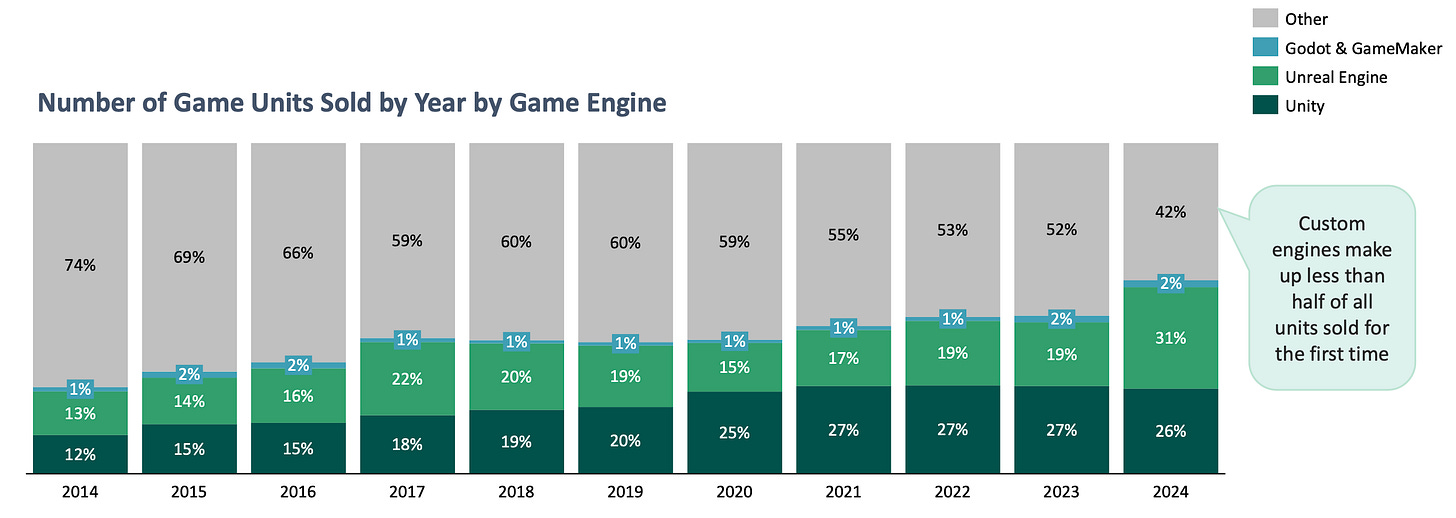
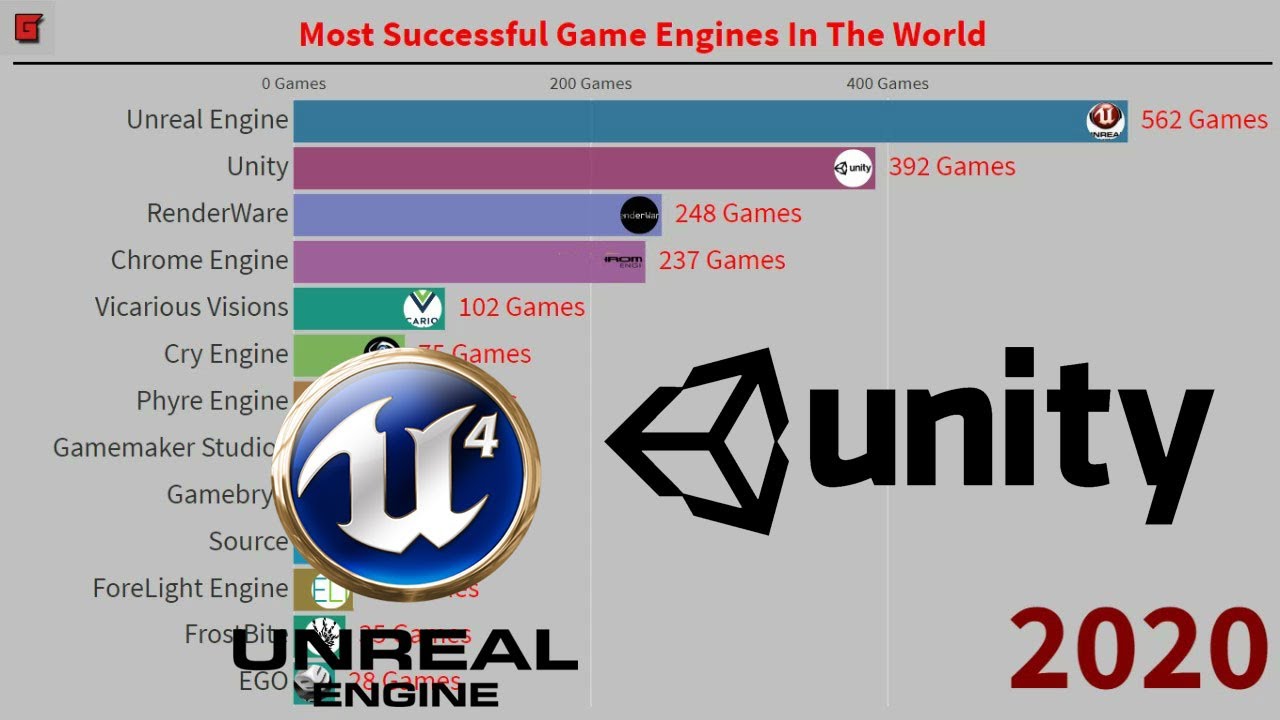
- Unreal Engine: Known for its stunning photorealistic graphics, advanced rendering capabilities, and powerful visual scripting (Blueprints). It's often favored by AAA studios for high-fidelity PC and console games, though its scalability for mobile is improving. Recent trends show its increasing adoption for cinematic quality visuals.
- Unity: Highly versatile and popular across indie studios, mobile game development, and even AR/VR projects. It's known for its user-friendly interface, extensive asset store, and strong community support. Unity is excellent for games across almost all platforms, from mobile dominance to PC/console cross-play.
- Godot Engine: An open-source, community-driven engine that's gaining traction. It's lightweight, free, and excellent for 2D and 3D games, especially for developers who value freedom and transparency. It's a great choice for those on a budget or looking to learn game development without licensing fees.
Developers consider factors like the target platform (mobile, PC, console), project scope, team size, desired visual style, available talent, and licensing costs. For many gamers, knowing which engine powers their favorite game can give insight into its potential strengths and weaknesses, and even predict future performance or visual trends.
Can Understanding Game Engines Help Me Optimize My Own Gaming Setup?
Absolutely! A basic grasp of how gaming engines are made empowers you to become a more intelligent optimizer of your own gaming rig. Here's how:
- Graphics Settings: Knowing about rendering pipelines helps you understand what each graphics setting (e.g., anti-aliasing, texture quality, shadows, global illumination) actually does and how it impacts performance. You can then prioritize settings that matter most to you, whether it's high frame rates for competitive play or stunning visuals for immersive adventures.
- Driver Updates: Game engines rely heavily on graphics drivers to communicate with your GPU. Understanding this relationship emphasizes the importance of keeping your drivers up-to-date, as new driver versions often include optimizations specifically for popular engines and games.
- Hardware Upgrades: When considering a hardware upgrade on a budget, knowing which engine components are most demanding helps you make informed choices. Is your CPU bottlenecking physics calculations? Is your GPU struggling with complex shaders? This knowledge guides you towards the most impactful upgrade for your specific needs.
- Game Recommendations: If you know a particular engine runs well on your system, you can often feel more confident trying other games built on the same engine, assuming similar levels of optimization.
For the busy adult gamer, optimizing your setup means less time troubleshooting and more time enjoying your games, maximizing your value for money and ensuring a smoother experience.
What Role Do Game Engines Play in Modern Cross-Play and Social Gaming?
Cross-play and social gaming are huge trends in 2026, with many gamers connecting with friends across different platforms like PC, console, and mobile. Game engines are absolutely fundamental to making this possible. When delving into how gaming engines are made, their networking systems are designed to abstract away the complexities of different platforms. This means:
- Platform Agnosticism: Modern engines provide tools that allow developers to build game logic and assets that work across multiple operating systems and hardware configurations.
- Robust Networking Layers: Engines include sophisticated network code that handles data synchronization, latency management, and secure communication between players, regardless of their device. This is crucial for seamless multiplayer experiences.
- Unified Development: Developers can build a single version of their game within the engine and then deploy it to various platforms with minimal adjustments, enabling a wider player base for cross-play titles.
This technological backbone fostered by engines ensures that whether you're playing a cozy game with friends on your Switch or a competitive shooter on your PC, the experience is unified and smooth. It enhances the social aspect of gaming, allowing friends and families to connect more easily, a key stress-relief for many.
How Do Game Engines Handle New Trends Like VR, AI, and Cloud Gaming?
The gaming world is constantly evolving, and game engines are at the forefront of adopting and enabling new technologies:
- Virtual Reality (VR) and Augmented Reality (AR): Engines like Unity and Unreal have dedicated VR/AR frameworks and tools. They handle stereoscopic rendering (two images for each eye), motion tracking, and specialized input methods required for immersive experiences. The architecture for how gaming engines are made is flexible enough to integrate new display and interaction paradigms.
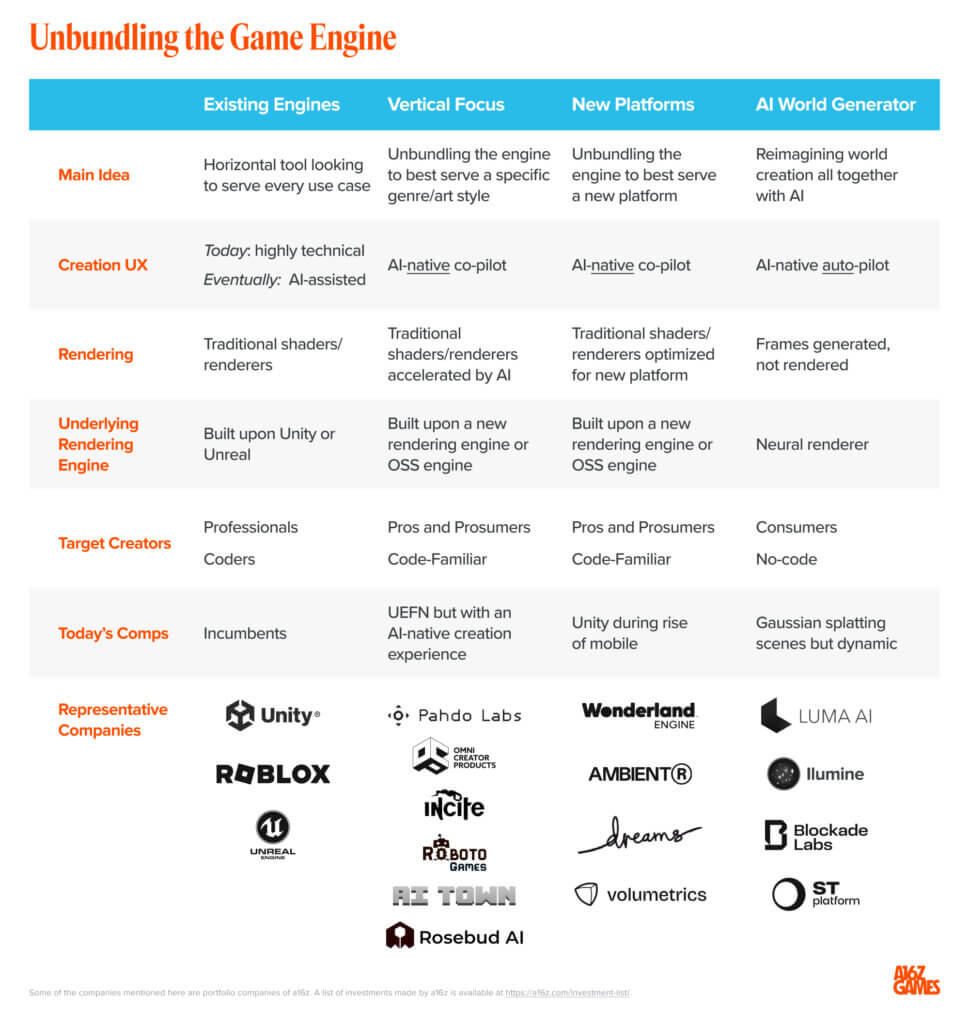
- Artificial Intelligence (AI): Beyond traditional NPC behavior, engines are integrating more advanced AI. This includes machine learning for more adaptive enemies, procedural generation driven by AI for vast unique worlds, and even AI-assisted content creation to speed up development.
- Cloud Gaming: For services like Xbox Cloud Gaming or NVIDIA GeForce NOW, engines need to be optimized for streaming. This involves efficient asset loading, adaptive resolution scaling, and low-latency input processing to ensure a responsive experience over an internet connection.
- Procedural Generation: Engines are increasingly incorporating tools for procedurally generating vast environments, quests, or assets. This allows for limitless exploration in games and significantly reduces manual development time, offering fresh content without massive updates.
These advancements demonstrate the incredible adaptability of game engines, ensuring that the future of gaming, with its blend of cutting-edge tech and evolving player expectations, remains exciting and accessible.
What Are the Challenges in Building a Game Engine from Scratch?
While many studios license existing engines, some opt to build their own custom technology. This is an immense undertaking with significant challenges:
- Massive Complexity: A game engine involves every aspect of computer graphics, physics, sound, networking, and programming. Building each of these components from the ground up requires specialized expertise in diverse fields.
- Time and Resources: Developing a feature-rich, stable engine can take years and require a large team of highly skilled engineers. This diverts resources from actual game development.
- Maintenance and Updates: Engines require constant maintenance, bug fixing, and updates to keep up with new hardware, operating systems, and rendering techniques.
- Lack of Community/Ecosystem: Custom engines lack the vast asset stores, tutorials, and community support that come with commercial engines, making problem-solving more isolated.
Most independent developers or even mid-sized studios find building an engine from scratch cost-prohibitive. For them, leveraging the power of established engines means they can focus on what they do best: creating captivating games for us to enjoy. This decision directly impacts how quickly new games can come to market and how stable they are at launch.
How Will Gaming Engines Evolve in the Next Few Years?
The evolution of game engines is relentless, driven by advancements in hardware and a constant demand for more immersive, dynamic, and accessible experiences. Looking ahead, here’s how gaming engines are made will likely evolve:
- Deeper AI Integration: Expect AI to move beyond NPC behavior into procedural content generation, adaptive storytelling, and even AI-powered tools for developers to accelerate game creation.
- Hyper-Realistic Rendering: Technologies like full path tracing (an advanced form of ray tracing) will become more common, delivering unparalleled lighting and visual fidelity, blurring the lines between virtual and reality.
- Enhanced Accessibility: Engines will continue to integrate more tools and features to make games playable for a wider audience, including advanced customization for controls, visuals, and audio.
- Cloud-Native Optimization: As cloud gaming grows, engines will be further optimized for streaming, emphasizing efficiency, low latency, and dynamic scalability to deliver console-quality experiences across devices.
- More Modular and Scalable Architectures: Engines will likely become even more modular, allowing developers to easily swap components, integrate third-party tools, and scale their projects from tiny indie titles to massive AAA productions more efficiently.
- Interactive Storytelling: Engines will offer richer tools for creating branching narratives and player-driven consequences, fostering deeper immersion for Gen Z/Millennial players who value agency.
These advancements promise to deliver games that are not only more beautiful and performant but also more intelligent and adaptable, making every gaming session a unique and memorable adventure for the average gamer.
Understanding how gaming engines are made might seem like a deep dive into technical territory, but as we’ve seen, it directly impacts the fun and frustration you experience in your favorite virtual worlds. From demystifying game performance issues to making informed decisions about hardware upgrades and new game purchases, this knowledge empowers you. You're not just playing games; you're appreciating the intricate art and engineering behind them, and that makes you a smarter, more engaged gamer. So the next time a game loads up, take a moment to appreciate the incredible engine humming beneath the surface, working tirelessly to deliver your escape.
What's your biggest gaming challenge that you wish game engines could solve better? Comment below!
FAQ Section
Is learning about game engines difficult for a non-developer?
No, grasping the basics of how gaming engines are made is quite accessible. This guide focused on what matters to gamers: understanding performance, graphics, and system requirements, not coding. Think of it like knowing how a car works to drive it better, not to build one. It helps you make informed choices and troubleshoot common issues without needing to be an engineer yourself.
What is the difference between a game engine and a game framework?
An engine is a comprehensive, all-in-one suite providing many ready-to-use tools (like Unity or Unreal). A game framework, however, is a collection of libraries and tools that give developers more control but require more setup and coding from scratch. When considering how gaming engines are made, an engine is a house with rooms, a framework is a pile of bricks.
Can mobile games use the same engines as PC/console games?
Many popular engines like Unity and Unreal are designed to be cross-platform, meaning they absolutely support mobile game development alongside PC and console titles. This allows developers to port games more easily or create experiences that work seamlessly across devices, catering to the mobile dominance in US gaming trends.
How do game engines contribute to game updates and patches?
Engines provide robust tools for developers to manage and deploy changes. Their modular design allows studios to update specific assets, code segments, or features without rebuilding the entire game. This makes pushing out regular patches, seasonal content, and balancing updates efficient, keeping live-service games fresh for the 87% of US gamers who play regularly.
Are free-to-play games using simpler engines?
Not necessarily. Many free-to-play (F2P) titles use sophisticated commercial engines like Unity or Unreal. The choice of engine is based on project needs and scale, not monetization model. F2P games often require robust networking and efficient asset management, areas where advanced engines excel, supporting their complex in-game purchase systems and ongoing content releases.
How do engines manage in-game purchases and monetization?
Game engines often include frameworks or integration points for various payment APIs and monetization services. They provide the infrastructure for tracking player purchases, managing virtual economies, and delivering digital content. This integration is crucial for the business model of many modern games, allowing developers to manage in-game stores and transactions efficiently while delivering value for money to players.
How do game engines support social features like voice chat and friend lists?
Many modern game engines integrate or facilitate the integration of third-party social SDKs and networking solutions. These tools handle real-time communication protocols for voice chat, manage friend lists, and enable seamless matchmaking. This robust social infrastructure is vital for the current trend of social gaming, ensuring players can easily connect, communicate, and enjoy shared experiences, whether on Discord or directly in-game.
Building blocks of game engines rendering physics audio scripting networking explained. Performance optimization and troubleshooting tips derived from engine knowledge. Understanding game engine impact on game quality and player experience. Navigating hardware upgrades and game recommendations with informed insight. The role of engines in social gaming and cross-play trends. Future of gaming engines including AI integration and procedural generation.
35



Rust Game Engines In 2026 Bevy Vs Macroquad Vs Ggez Vs Fyrox Which . Best Game Engines In 2026 The Complete Guide For Beginners And Studios Best Game Engines In 2026 . Top 10 Best Game Engines 2026 For Fast Development Quick Comparison Table Of The Best Game Engines . The Best Game Engines You Should Consider For 2026 Best Game Engine 2026 . Best Game Engines For Beginner Game Developers In 2026 77d5e9432b 768x589



Best Game Engines For Beginner Game Developers In 2023 Image13 . The Best Gaming Engines For 2026 1685146147 Scaled 1 . Advanced PC Game Development Techniques Top Game Engines 1.webp. How Unreal Engine Powers AAA Game Development SDLC Corp How Unreal Engine Powers AAA Game. Best Unreal Engine Game Development Companies In 2026 Best Unreal Engine Game Development Companies 1024x683


Best C Game Engines In 2026 Performance Features Use Cases Best C Game Engines In 2026 . Best HTML5 Game Engines For Developers 2026 Guide Best Html5 Game Engines 2026.webp. 10 Best Game Development Engines For New Developers In 2026 Techneeds Gjkozndp Start At The Center With Cry Engine Then Follow The Branches To See Its Features Challenges Community Support And Examples Of Successful Games Each Branch Represents A Different Aspect Of What Makes Cry Engine A Powerful Tool For. Game Engines Market Size Share Trends Analysis Forecast 2026 Game Engines Market 2 1024x576 . What Are The Best Game Engines In 2026 Game Logos

Best Game Engines In 2026 The Complete Guide For Beginners And Studios Game Engines 2026 . Top 10 Game Engines In 2026 Features Pros Cons Comparison Image 267 . Video Game Insights Game Engines On Steam In 2025 48e32973 2df2 407e A57f 2736x974 . Game Art Outsourcing Cost Guide 2D 3D Art Pricing 2d Game Engines 1030x687 . Page 1 Video Game Engines Category Engines



Gaming Engine Development Topics For Tech Fests 2026 Gaming Engine Development Topics For Tech Fests 2026 . Top C Game Engines In 2025 The Ultimate Guide For Developers 1536x1024 . Best Game Engine For Beginners Tech Imaging Mage May 28 2025 03 13 06 PM 1.webp. Ranking The 60 Largest Gaming Companies Of 2026 A Look At The Engines Ranking The 60 Largest Gaming Companies Of 2026 A Look At The Engines That Run Pop Culture Pdf 1 2048 . The Best Game Engines You Should Consider For 2026 The Best Game Engines You Should Consider For 2026 1





Q1 2026 Classic 12 Engines 24 RR 1584 Games At 45m Chatg153 . What S Fact And Fiction In F1 S 2026 Engine Anxieties The Race 2026 F1 Engine Set Up . Honda Sounds Alarm On 2026 Engine Not Everything Is Going Well . Complete Tear Up Inside Mercedes 2026 F1 Engine Project 2026 ENGINE SPLIT . Ranking The 60 Largest Gaming Companies Of 2026 A Look At The Engines Ranking The 60 Largest Gaming Companies Of 2026 A Look At The Engines That Run Pop Culture Pdf 15 2048


Who Should Cadillac Pick For Its F1 Line Up Our Verdict 2026 Engine Teams . Testing The F1 2026 Engines In The F1 Game YouTube . Best Game Engines For Beginner Game Developers In 2024 Gds Video Game Engines Featured Img Min . Most Successful Game Engines In The World 1998 2020 YouTube . Unbundling The Game Engine The Rise Of Next Generation 3D Creation Unbundling The Engine 1 969x1024