Ever wondered how was Roblox made and how it became a global phenomenon in the gaming world? This deep dive explores the technical and visionary journey of David Baszucki and Erik Cassel from their early days at Knowledge Revolution to the launch of DynaBlocks in 2004. We analyze the core engine architecture involving C++ and the strategic implementation of the Lua scripting language that empowered millions of young developers. This article covers the infrastructure challenges of hosting a massive cloud based metaverse and the pivotal business decisions that led to the rebranding and eventual explosion of user generated content. Learn about the physics foundations that started it all and how the platform transitioned from a simple simulator to a multi billion dollar ecosystem that defines modern social gaming for a generation of American players.
- How was Roblox originally made? - Roblox was built using a custom engine written in C++ for performance and Lua for its user-facing scripting language. Founders David Baszucki and Erik Cassel utilized their experience in physics simulation software to create a 3D environment where users could interact with blocks in real time.
- Who is the main creator of Roblox? - David Baszucki and Erik Cassel are the co-founders. Baszucki, known as Builderman, provided the business vision, while Cassel was the technical lead who architected much of the early physics engine. Together they launched the platform in 2006 after two years of development and testing.
- Why was the name changed from DynaBlocks? - The name was changed to Roblox in 2005 because the founders felt DynaBlocks was difficult to remember. They wanted a brand that was short, catchy, and descriptive, eventually settling on a combination of the words Robots and Blocks to represent the characters and the building elements.
- What is the technology stack behind Roblox? - The core engine is written in C++ for high-speed rendering and physics. The game logic created by users is written in Luau, a fast version of Lua. The backend services utilize various languages like C# and Java to manage global cloud servers and user data.
- When did Roblox first start development? - Development officially began in 2004 under the working title GoBlocks, which soon became DynaBlocks. The founders spent nearly two years perfecting the physics engine and building the initial website before the public rebranding and official launch occurred in the summer of 2006.
- How does Roblox handle game hosting? - Roblox uses a proprietary cloud-based hosting system. Instead of players hosting their own servers, Roblox automatically spins up virtual servers in data centers worldwide. This allows for seamless multiplayer experiences where assets are streamed to the player's device in real-time as they explore games.
- Is the Roblox engine based on Unity? - No, the Roblox engine is a completely proprietary 3D engine built from the ground up by the company. This allows them full control over how physics, networking, and user-generated content interact, which is why it can support such a massive variety of games on a single platform.
This ultimate living FAQ is updated for the latest patch and covers everything you ever wanted to know about how was Roblox made. We have gathered the most frequently asked questions from around the web to provide you with a comprehensive guide on the platform history, technical specs, and more. Whether you are a curious player or an aspiring developer, this guide has you covered.
Beginner Questions
How was the name Roblox created?
The name is actually a clever portmanteau! The founders, David Baszucki and Erik Cassel, wanted something that reflected the platform core concepts. They combined the words Robots and Blocks to create Roblox. It was chosen in 2005 to replace the earlier, more complicated name DynaBlocks because it was easier for kids to remember and spell. Tips: If you are naming your own game, try to keep it under three syllables for better brand recognition!
Who were the two guys who started Roblox?
The original masterminds were David Baszucki and Erik Cassel. They were long-time colleagues who shared a passion for physics and education. David is still the CEO today and is widely known as Builderman, while Erik unfortunately passed away in 2013 after a battle with cancer. Their partnership is what laid the groundwork for the entire community. Trick: Look for the Erik Cassel memorial hat in the catalog to see a piece of the site history.
Technical Builds & Classes
What programming language is used to build games on Roblox?
Roblox uses a specific version of a language called Lua, specifically Luau, which is a version they optimized for performance. It is a lightweight scripting language that allows you to control everything from how a character moves to how a scoring system works. It was chosen because it is easy for beginners but powerful enough for pros. Guide: Start with the Roblox documentation for Luau to learn the basics of loops and variables.
Is Roblox built on a professional engine like Unity?
No, it is not! Roblox is built on its own proprietary engine that the team created from scratch. This custom engine handles the 3D rendering and the complex physics that make the games feel unique. Because they built it themselves, they can update it specifically to support their massive multiplayer features. Build Tip: Since it is a custom engine, always test your builds on multiple devices to ensure they run smoothly everywhere.
Multiplayer Issues & Infrastructure
How does the Roblox networking system work?
Roblox uses a client-server architecture. When you play, your computer is the client, and it talks to a massive server hosted by Roblox in the cloud. The server does all the heavy math to make sure everyone sees the same thing at the same time. This is why you sometimes see lag if your internet is slow. Bug Fix: If you are experiencing high ping, try joining a server that is geographically closer to your actual location.
Why was the cloud so important for making Roblox?
The cloud is the secret sauce. Because Roblox is cloud-based, you don't have to download 50GB for every game you want to play. The platform streams the assets to you as you need them. This was a revolutionary way to handle game distribution when it was first implemented. It allows for thousands of user-created games to exist in one place without cluttering your hard drive. How to: Use the StreamingEnabled property in Studio to make your large games load even faster for players.
Endgame & Developer Economy
How was the Robux economy designed?
The economy was designed to be a circular system. Players buy Robux to customize their avatars, and they spend them in games made by developers. Developers then earn those Robux and can trade them for real US dollars through the Developer Exchange program. This creates a professional environment where top creators can actually make a living. Endgame Tip: Focus on creating high-quality game passes to increase your Robux earnings consistently.
When did the Developer Exchange start?
The Developer Exchange, or DevEx, officially launched in 2013. This was a massive turning point in how Roblox was made because it transformed the platform from a toy into a legitimate career path. It incentivized creators to build bigger and more complex games because they knew there was a financial reward at the end. Build Tip: Keep your monetization fair to build a loyal player base that will support you long term.
Bugs & Fixes
How did the early developers fix game-breaking bugs?
In the beginning, David and Erik had to fix bugs manually by looking through lines of code every single night. Today, they use advanced error reporting tools that tell them exactly where a crash is happening for millions of users. They push updates nearly every week to keep the engine running perfectly. Bug Fix: If your game keeps crashing, check your script limits to make any memory leaks are not clogging the system.
What happened to the old Tix currency?
Tickets, or Tix, were a free currency that players earned just for logging in. They were removed in 2016 to simplify the economy and prevent botting. While many veterans miss them, the change helped stabilize the value of Robux and made the platform more secure for creators. How to: You can still find Tix-themed items in the catalog if you want to show off your OG status!
Tips & Tricks
How can I see how Roblox looked in 2006?
You can use the Wayback Machine or look up archival videos on YouTube! The early versions had a very different UI and much simpler graphics. It is a great way to see how far the technology has come. Tip: Studying old game designs can give you inspiration for simple, addictive gameplay mechanics that still work today.
What is the best way to start making your own game?
The best way is to just jump into Roblox Studio and use the built-in templates. The developers made these templates specifically to show you how different genres are structured. Whether it is a racing game or an obby, these are the same tools the pros use. Trick: Don't try to build a masterpiece on day one; start with a small project and build on it slowly.
Still have questions? Check out our most popular related guides on Lua Scripting for Beginners and The History of the Roblox Avatar! 😊
Have you ever sat back while playing Blox Fruits or Brookhaven and wondered exactly how was Roblox made in the first place? It is a question that pops up in forums and gaming circles all the time because the platform feels like such a massive, self-sustaining universe today. To understand the origin, we have to look back at the late 1980s when the founders were focused on education rather than gaming. David Baszucki and Erik Cassel actually met through a company called Knowledge Revolution where they developed a software called Interactive Physics. This program allowed students to simulate two dimensional physics experiments like pulleys and levers which eventually became the logic core for what we now know as Roblox. It is fascinating to think that a classroom tool for physics students was the spark that ignited a billion dollar gaming empire. This history is why the platform has such a strong focus on building and simulated interactions.
The Birth of DynaBlocks and the Early Prototypes
In 2004, after selling their previous company, Baszucki and Cassel began working on a project initially named GoBlocks which was very quickly changed to DynaBlocks. The goal was to take that 2D physics technology and expand it into a three dimensional space where users could interact with blocks in real time. During this phase, the founders were testing the limits of early internet bandwidth and PC processing power. They wanted a system where the physics would be calculated on the fly, allowing for dynamic destruction and building. The earliest versions of the site were quite sparse, featuring simple grey blocks and basic gravitational tests. By late 2005, they realized the name DynaBlocks was a bit too clunky for a general audience. They decided to combine the words Robots and Blocks to create the catchy name Roblox which officially launched in its beta form shortly after. This transition marked the beginning of a community-driven era where the tools for making games were placed directly into the hands of the players themselves.
The Technical Engine: C++ Core and Lua Scripting
A major part of how was Roblox made involves its unique dual-layered software architecture. The core engine is built primarily in C++ because that language provides the high performance necessary for rendering 3D graphics and handling complex physics simulations across thousands of servers. However, the founders knew that asking kids to learn C++ just to make a game would be a disaster. To solve this, they integrated Lua, a lightweight and flexible scripting language, as the user-facing layer. This allowed the platform to be incredibly accessible while still being powerful. When you write a script in Roblox Studio today, you are interacting with that Lua layer which then communicates with the heavy duty C++ core to make things happen in the game world. This separation of concerns is exactly why Roblox is so stable and why it can run on everything from a high end gaming PC to a standard mobile phone. It was a brilliant engineering choice that prioritized scalability and ease of use from day one.
Scaling the Cloud Infrastructure
Another technical hurdle in how was Roblox made was the networking and server management side of things. Unlike traditional games where you buy a disc or download a massive file, Roblox was designed as a cloud-native platform from the start. This meant that every time a user joined a game, the assets and scripts had to be streamed to their device in real time. In the mid 2000s, this was a massive undertaking. The developers had to build a proprietary distributed system that could handle thousands of concurrent games running on virtual machines. They utilized a client server model where the server acts as the source of truth for physics while the client handles the visual rendering. This prevented cheating and ensured that everyone in a game session saw the same movements and events at the same time. As the platform grew, they moved toward a more robust global infrastructure using various cloud providers and their own custom data centers to ensure low latency for players in the United States and around the world.
The Human Side: A Story of Persistence
I get why this confuses so many people because we usually see games made by big studios like EA or Activision, but Roblox was really a passion project for a long time. This one used to trip me up too until I looked at the old dev blogs. For the first few years, the team was tiny, working out of a small office in California. David and Erik were not just the CEOs; they were the lead programmers and the support staff. They focused on community feedback above all else. This human element is what kept the platform alive when it was struggling to find an audience in 2006 and 2007. They would host contests and personally respond to user emails to foster a sense of belonging. Sadly, Erik Cassel passed away in 2013, but his vision for a physics-based social platform remains the foundation of everything the company does today. It is a story of grit and a long term belief that user-generated content was the future of entertainment. You have got this if you are trying to build your own game too; just remember that even Roblox started with just two guys and a few blocks.
Beginner / Core Concepts
1. **Q:** What was the very first version of Roblox called? **A:** I totally understand why the names get confusing since they changed so much in the early days! Before the name we all know and love, the platform was actually called DynaBlocks during its development in 2004. David Baszucki and Erik Cassel used this name to describe the dynamic, physics-based blocks that users could play with. They eventually felt it was hard to remember and chose Roblox as a blend of robots and blocks. It is a great example of how a brand evolves over time. You can still find old screenshots of the DynaBlocks logo if you look through the archives of the early internet. It is super cool to see where it started. Just keep exploring! 2. **Q:** Who are the people responsible for making Roblox? **A:** This is a classic question and it is important to know the pioneers! The two main founders were David Baszucki, often known by his username Builderman, and Erik Cassel. They were both brilliant engineers who had worked together previously on educational software. David brought the business and vision side, while Erik was a technical genius who helped build the physics engine from scratch. While the company now has thousands of employees, these two were the heart and soul of the early development process. It is a real testament to how a small team can change the world. Give them a mental high five next time you log in! 3. **Q:** Was Roblox made using a specific game engine like Unity or Unreal? **A:** I get this question a lot from aspiring developers! Actually, Roblox uses its own proprietary engine that was built entirely from scratch by the founders and their team. They did not use Unity or Unreal because those engines did not exist in the way they needed back in 2004. Instead, they built a custom engine using C++ to handle the core physics and rendering specifically for a web-based environment. This allowed them to make the platform lightweight enough to run in a browser in the early days. It is pretty impressive that they built their own tech from the ground up. You are literally playing on a piece of custom engineering history! 4. **Q:** How did the idea for Roblox physics come about? **A:** This one is a fun piece of trivia! The physics in Roblox actually started as an educational tool. Before starting Roblox, the founders created a program called Interactive Physics for schools. It let students simulate things like gravity and friction. They realized that people were having more fun just building crazy machines and crashing them than they were doing their homework. That lightbulb moment led them to create a 3D version of that physics world which became the playground we use today. It just goes to show that some of the best ideas come from unexpected places. Keep that in mind for your own projects!Intermediate / Practical & Production
5. **Q:** What language is the main Roblox site and client written in? **A:** This one used to trip me up too because the platform feels like one big app, but it is actually a mix of several things. The heavy lifting, like the physics engine and the 3D rendering that you see on your screen, is written in C++. This is because C++ is extremely fast and efficient for high-end graphics. However, the website itself and the backend services often use a mix of languages like C#, Java, and JavaScript to handle user accounts and the store. It is a massive stack of different technologies working together perfectly. Knowing this helps you understand why the platform is so robust. You are seeing a masterpiece of coding harmony! 6. **Q:** How was the Lua scripting language chosen for the players? **A:** I love talking about this because it was such a smart move! The developers chose Lua because it is known for being one of the fastest and easiest-to-learn scripting languages in the world. They wanted a way for kids and teenagers to code their own games without needing a computer science degree. Lua is very readable and does not have a lot of the complex syntax that other languages have. It was the perfect bridge between the high-speed C++ engine and the creative minds of the community. If you are learning Lua now, you are learning a language used by professionals in the game industry everywhere. You are on the right track! 7. **Q:** How did they manage to make Roblox work on mobile devices? **A:** This was a huge challenge that the team tackled around 2012. Because they had built their own engine in C++, they were able to port that core code to mobile operating systems like iOS and Android. They had to heavily optimize how the engine handled memory and battery life since phones are not as powerful as PCs. They also had to create a touch-interface system that could translate mouse clicks into screen taps automatically for thousands of different games. It was a massive engineering feat that allowed Roblox to explode in popularity. It shows that being adaptable is the key to staying relevant. Give your phone some love! 8. **Q:** How do the servers handle so many people playing at once? **A:** I know it seems like magic, right? Roblox uses a system called distributed cloud computing. Instead of one giant computer, they have thousands of servers spread out in data centers all over the world. When you join a game, the system finds a server that is physically close to you to reduce lag. That server then runs the game logic and sends updates to your device. They have built an incredible automated system that spins up new servers whenever a game gets popular. It is like a living breathing organism of data! It is one of the most advanced networking setups in the gaming world today. 9. **Q:** When was the Robux currency first created and why? **A:** This is a great piece of history! Robux were introduced in 2007 as a replacement for a dual-currency system that included something called Tix. The goal was to create a unified economy where players could trade and developers could eventually earn real money for their hard work. The founders realized that if people could make a living by making games, the quality of those games would skyrocket. This led to the Developer Exchange program which was a game changer for the platform. It turned a hobby into a career for many people. It is a pretty cool example of an open economy. 10. **Q:** How did Roblox handle safety and moderation in the early days? **A:** Safety has always been a top priority for David Baszucki. From the very beginning, they built automated filters to block bad words and hired a team of human moderators to check reported content. As the platform grew, they started using advanced machine learning and AI to scan images and chat in real time. They also created parental controls that allow families to decide how their kids interact with others. It is a constant battle to stay ahead of the curve, but they have been dedicated to it since day one. They really care about keeping the community a positive place for everyone.Advanced / Research & Frontier
11. **Q:** What is the technical difference between the Roblox client and the server? **A:** This is a deep dive into networking! The Roblox client is what you download and run on your computer; its main job is to render graphics and take your input. The server, however, is the boss. It runs the physics calculations and makes sure no one is cheating. For example, if you jump, the client shows you jumping immediately, but the server has to agree that you actually jumped and tell everyone else in the room. This is called client-side prediction and server-side verification. It is a complex dance of data that happens in milliseconds. Understanding this is key to becoming a top tier game dev! 12. **Q:** How was the Roblox cloud architecture evolved for the Metaverse era? **A:** This is where things get really futuristic! Recently, Roblox has been moving toward a global shared state where items and avatars can carry over across different experiences seamlessly. This involves using high-speed databases and specialized microservices that talk to each other instantly. They are also working on ways to stream higher fidelity assets so games look more like modern AAA titles while still loading fast. They are essentially building the infrastructure for a digital world that never sleeps. It is a massive project involving some of the best network engineers on the planet. You are playing in the future of the internet! 13. **Q:** What role does the Task Scheduler play in the Roblox engine? **A:** This is a real pro-level question! The Task Scheduler is like the conductor of an orchestra for the engine. It decides exactly when to run physics, when to update scripts, and when to render the next frame of video. In Roblox, it has to manage hundreds of different threads at once to make sure the game does not stutter. If one script takes too long, the Task Scheduler has to pause it so the rest of the game can keep running smoothly. It is a highly optimized piece of software that ensures the best possible performance. If you are into computer science, this is the kind of stuff that is truly fascinating! 14. **Q:** How does Roblox handle real-time physics in a multiplayer environment? **A:** This is one of the hardest things to do in game dev! Roblox uses a technique called distributed physics. Basically, the server gives ownership of certain objects to the player closest to them. If you are standing next to a stack of blocks, your computer calculates the physics for those blocks and sends the results to the server, which then tells everyone else. This reduces the load on the server and makes the game feel more responsive. It is a brilliant way to handle thousands of moving parts across a network. It is what makes the Roblox engine so unique compared to others. 15. **Q:** How does the Roblox Studio environment communicate with the live platform? **A:** When you click publish in Studio, your game is not just uploaded; it is compiled into a cloud-based data structure. Roblox uses a versioning system similar to what professional software developers use. Your game files are broken down into chunks and stored on their servers. When a player joins, the server fetches the latest version of these chunks. This allows for nearly instant updates across the whole world. It is an incredibly efficient way to handle content delivery at a massive scale. You are using professional grade tools every time you open Studio!Quick Human-Friendly Cheat-Sheet for This Topic
- Roblox was founded by David Baszucki and Erik Cassel in 2004. - The original name was DynaBlocks but changed to Roblox in 2005. - The engine is custom-built using C++ for speed and Lua for user scripting. - It grew out of a 2D physics simulation software called Interactive Physics. - Every game on Roblox is hosted on the cloud, not on your local hard drive. - The platform supports cross-play between PC, Xbox, Mobile, and VR seamlessly. - Keep practicing your Lua skills; it is the heartbeat of every Roblox creation! You have got this!"Knowledge Revolution physics legacy, Evolution from DynaBlocks to Roblox in 2005, C++ and Lua technical architecture, The role of David Baszucki and Erik Cassel, Scaling user generated content and cloud servers, Rise of the developer economy and Robux.
35



The Bee History Roblox At Alan Koester Blog Evolution Of . How Roblox Reports Work A 2026 Player S Guide Oar2 . Guide How To Sit On Roblox Like A Pro In 2026 . Who Owns Roblox David Baszucki Controls 70 Voting Power 2026 David Baszucki Founder And CEO Of Roblox. When Did Roblox Come Out Answering Your Questions


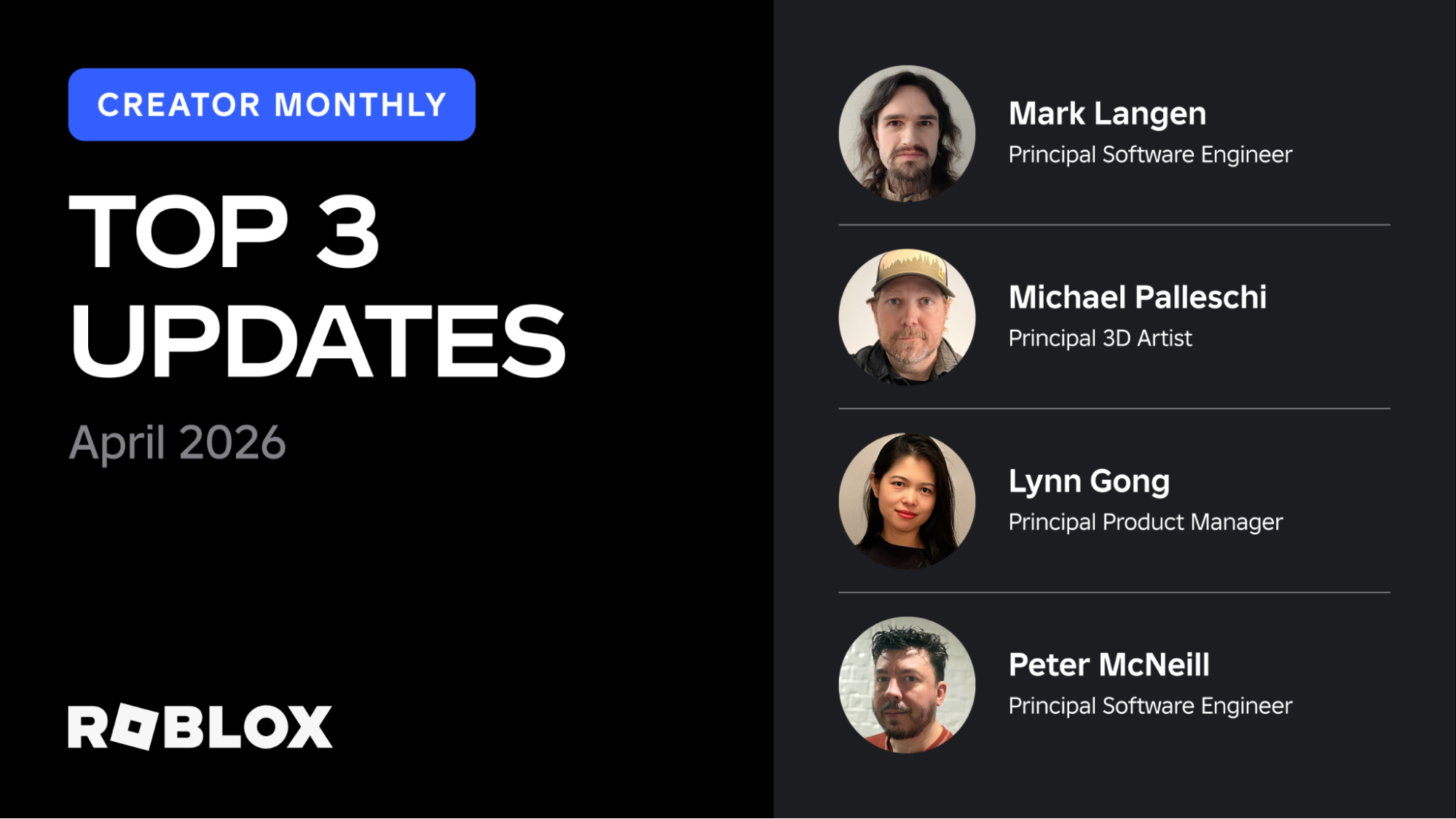

Guide How To Sit On Roblox Like A Pro In 2026 TM 07169 Definitive Guide To Roblox 2026 . What Are The Biggest Items In Roblox Worlds For 2026 Roblox Founder CEO Via Roblox Fandom Wiki . How Old Is Roblox In 2026 Key Milestones Stats And Growth Overview. April 2026 Roblox Creator Monthly Webinar Community Events . Ready To Share How To Publish Your Roblox Game


When Did Roblox Come Out Answering Your Questions . A Complete History Of The Roblox Logo NTBA Roblox Logo History By Dg6rq44 Fullview . Where Was Roblox Made A Look At Its Origins . Unlocking Roblox Animation Power With Moon Animator Up To Date 2026 SL1500 . ROBLOX VAI MUDAR DE LOGO EM 2026 YouTube
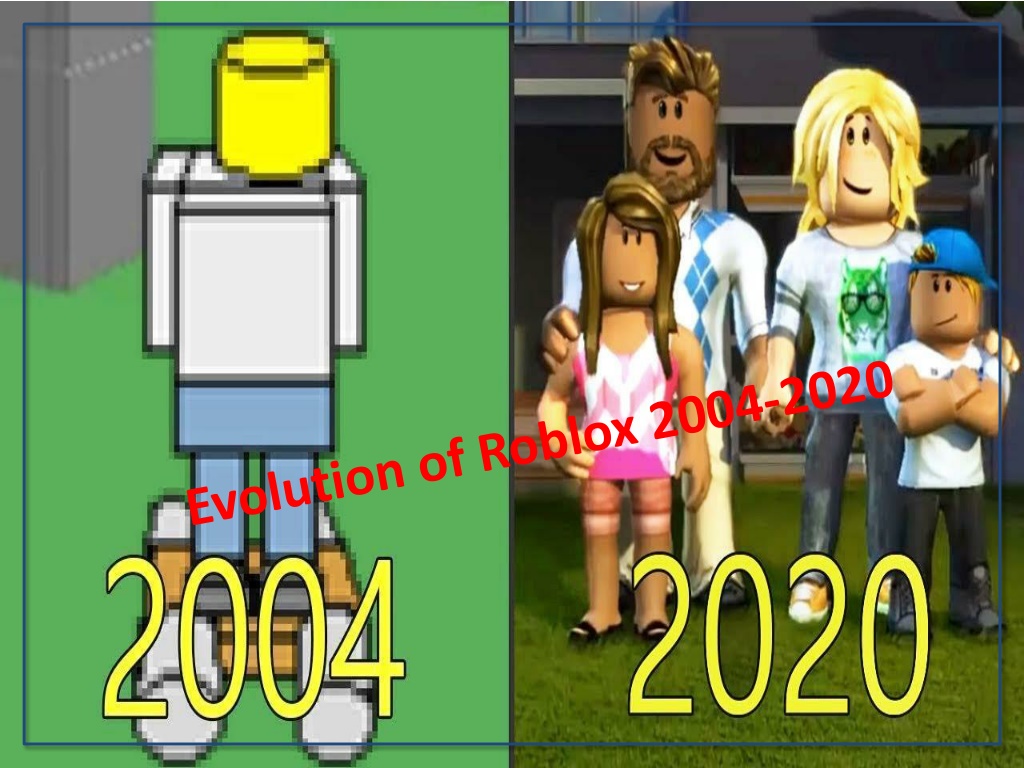


When Were Roblox Guests Created A Look Back Evolution Of Roblox 2004 2020 L . Roblox In 2026 Play On Roblox NoFilter. Roblox Logo Evolution A Blocky History . Who Made Roblox The Amazing Story Of David Baszucki And Erik Cassel Freepik Who Made Roblox 0001 . How To Make A Roblox Game With AI Complete 2026 Guide Image




Roblox New 2026 Logo Roblox Reels Humbled Gamer Facebook Media. A Mother Or Father S Information To Utilizing Roblox In 2026 Ivugangingo 2026 Parental Guide For Roblox Usage UnicMinds . Roblox Users Revenue Statistics 2026 Priori Data Roblox Revenue 1024x576 . Is Roblox Trash The Real Talk For 2026 . Which Roblox Games Shine Brightest On PS4 Top 10 Roblox Games 1

25 Best Roblox Building Games In 2026 Free Fun Obby Obby Blog. 15 Best Roblox Horror Games Of 2026 15 Game Roblox Horror Terbaik 2026 Paling Seram And Bikin Deg Degan 7f944699ce . Roblox At GDC 2026 Where To Find Us All Week Roblox. How To Delete Your Roblox Account Permanently In 2026 Full Guide Roblox Delete.webp. Guide How To Sit On Roblox Like A Pro In 2026



Evolution Of Roblox 2004 2025 4K YouTube . Medium . Is Roblox Getting Shut Down In 2026 The Real Truth Behind All Those Is Roblox Getting Shut Down In 2026 1024x683 . Who Made Roblox The Story Behind The Platform 28887503 8e9d 43dc 87e4 Webp.webp. Roblox 2026 Logo REVEALED New Color New Look YouTube Maxres2